
Roofing for the Long Haul: Metal vs. TPO for Your Orlando Industrial Property Investment
If you’re investing in Florida industrial properties, you know that true value is found beneath the surface—and above it. For a hard-working owner focused on legacy, the roof isn’t just a cover; it’s a critical capital asset that determines long-term cost, maintenance, and tenant security.
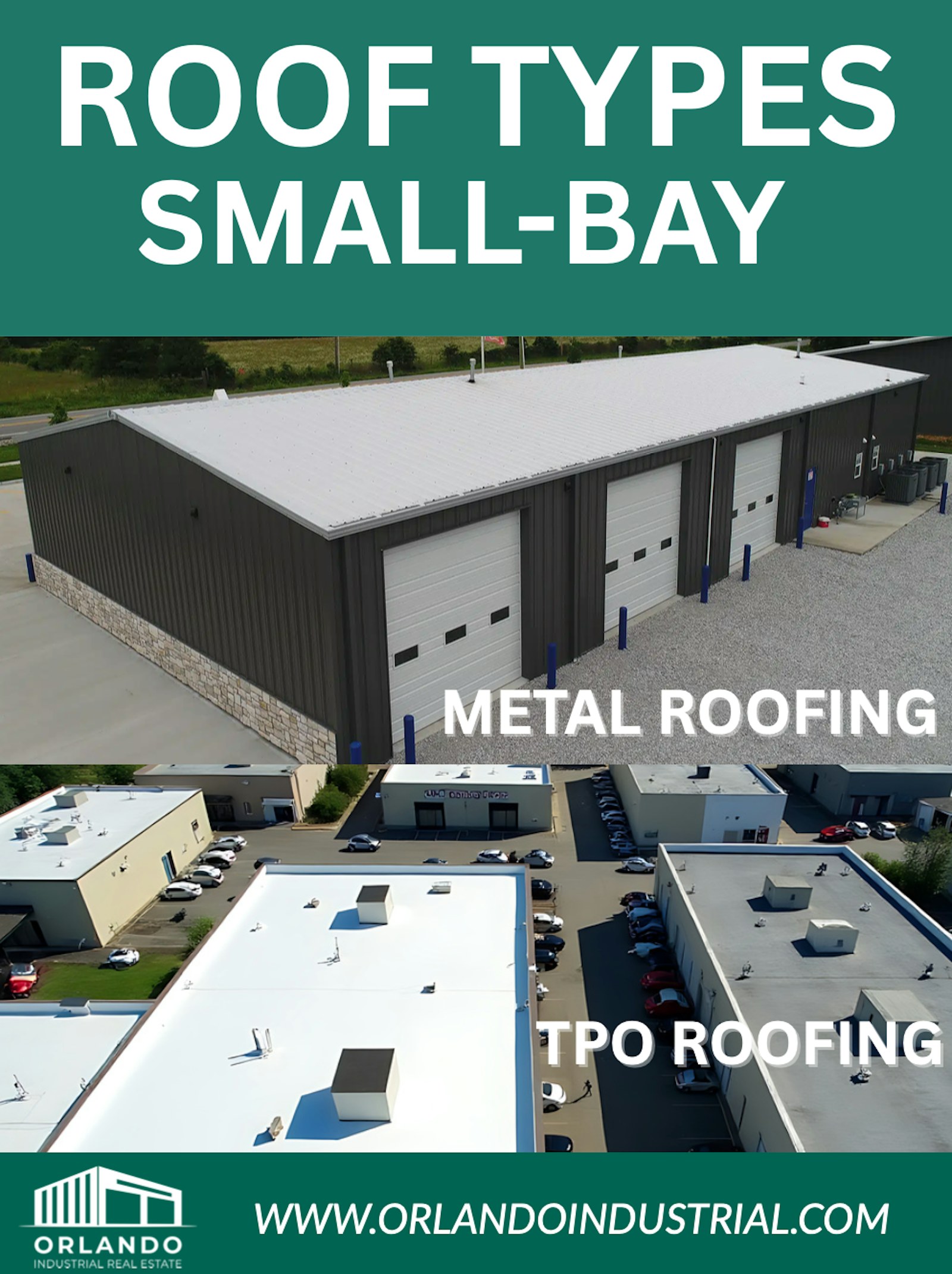
The battle for the best commercial real estate roof comes down to two choices: Metal (The Classic) and TPO (The Modern Performer). Your decision should align with your investment philosophy: durability and low maintenance versus upfront savings and energy efficiency.
The Metal Roof: Durability You Can Trust
Often found on older small-bay and flex-style warehouse buildings in Orlando, metal is the choice for the owner who believes in buying quality once.
The Metal Advantage (Built to Last):
Unmatched Longevity: Metal roofs are highly durable and long-lasting, often exceeding 30 years of service and potentially reaching 50+ with proper care.
Lower Maintenance: Over its lifetime, a metal roof typically requires less frequent inspections and maintenance than membrane systems.
Re-Coat, Don’t Replace: Metal can often be re-coated instead of fully replaced, extending its life and reducing the massive cost of a full overhaul.
The Metal Catch (High Initial Cost):
Higher Upfront Cost: Metal roofing has a significantly higher initial replacement cost than TPO.
The Heat Factor: Metal naturally absorbs more heat, which can put more strain on your HVAC system in the brutal Central Florida summers if the building isn’t properly insulated.
Fastener Risks: If poorly maintained, there is a potential for leaks to start at the fasteners.
TPO Roofing: The Energy-Efficient Solution
TPO (Thermoplastic Polyolefin) is a single-ply membrane system used primarily on flat or low-slope roofs, common on newer and larger warehouse buildings. It’s the go-to for developers prioritizing efficiency and faster installation. TPO performs well in Florida’s climate due to its reflective properties and flexibility.
The TPO Advantage (Cost and Efficiency):
Energy Efficient: TPO is highly reflective, which drastically reduces heat absorption and lowers cooling costs in Florida’s intense sun. This means a lower monthly utility bill and less strain on your air conditioning unit.
Lower Upfront Cost: TPO has a lower initial installation cost than metal, making it budget-friendly for those looking for mid-term value.
Simple Repairs: The material is generally easy to install and repair.
The TPO Catch (Durability Concerns):
Shorter Lifespan: TPO typically has a shorter lifespan, averaging 15–20 years, meaning you’ll face a replacement sooner than a metal roof.
Puncture Prone: The single-ply membrane is more prone to punctures from dropped tools, heavy foot traffic, or storm debris.
Installation is Key: Seams can fail if the installation process isn’t performed well and heat-welded correctly, which could lead to leaks down the line.
Industrial Property Management Orlando: A Long-Term View
As a prudent owner of industrial assets in central Florida, your choice depends on your timeline:
Priority | Strategy | Recommendation |
Longevity & Low-Interruption | You plan to hold the Industrial real estate asset for 20+ years and prioritize minimal interference with tenants. | Metal – Higher upfront, but significantly lower long-term maintenance costs and durability. |
Cost-Efficiency & Energy Savings | You prefer a lower initial investment and want immediate savings on cooling bills. | TPO – Lower upfront cost, excellent energy efficiency, but requires disciplined inspections and maintenance to reach its full 20-year lifespan. |
Regardless of the material, a roof is only as good as its maintenance. Work with a trusted industrial property management company to conduct biannual inspections (especially after a Florida storm) to protect your tenants and your investment.
Leave a Reply